
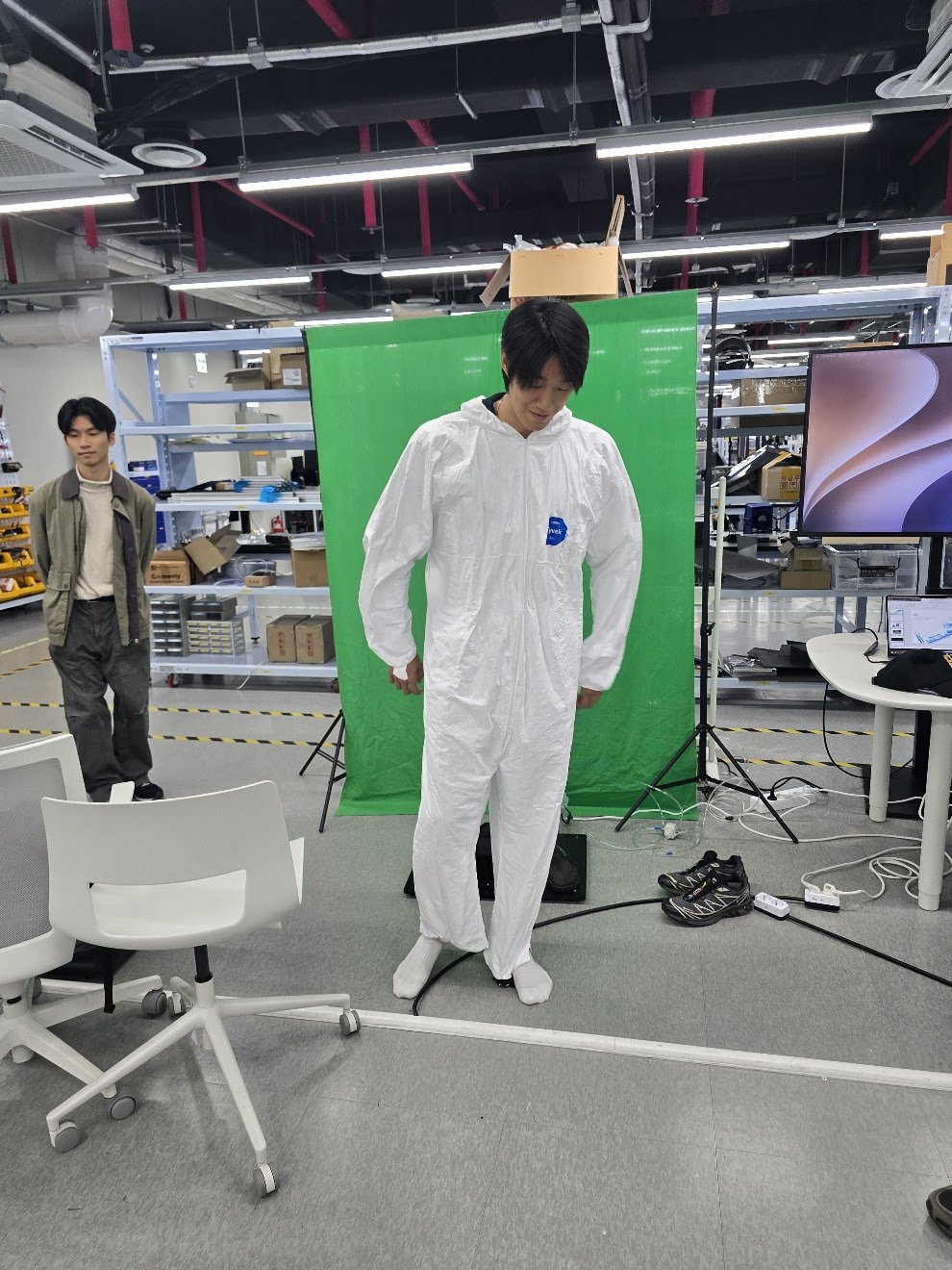
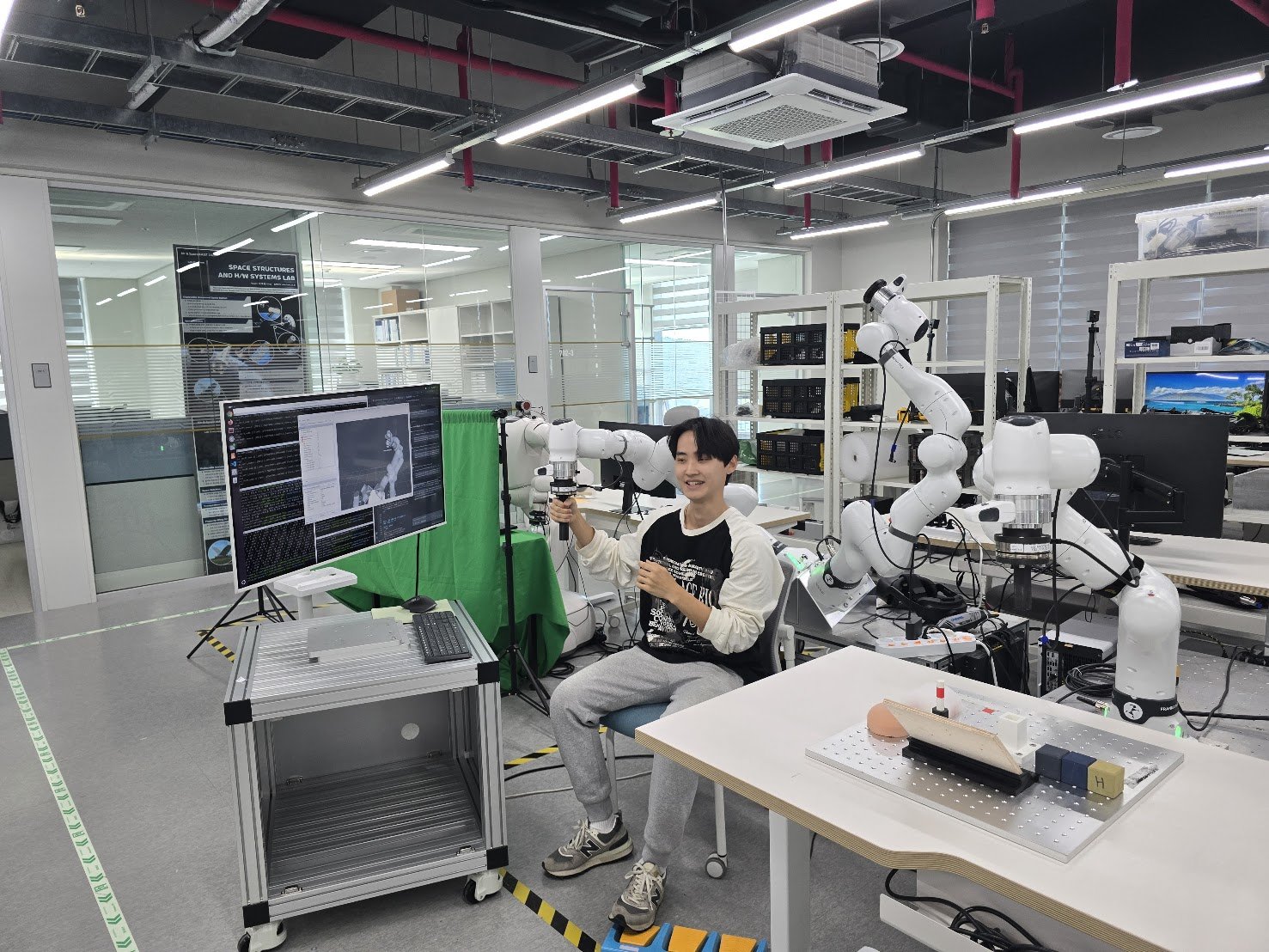
In late October 2026, Prof. Gunho Sohn travelled to Korea at the invitation of the T-RAX Research Center at KAIST, led by Prof. Hoon Sohn. T-RAX brings together civil engineering, AI and data science to transform railway infrastructure across its whole life cycle, and is supported by KAIST’s InnoCORE program. During the visit, Prof. Sohn gave two invited talks — a graduate seminar at KAIST in Daejeon, and a talk in the T-RAX special session of the Korean Society for Railway’s autumn conference in Jeju — and toured research labs at KAIST.
KAIST seminar: Autonomous Trains with AI
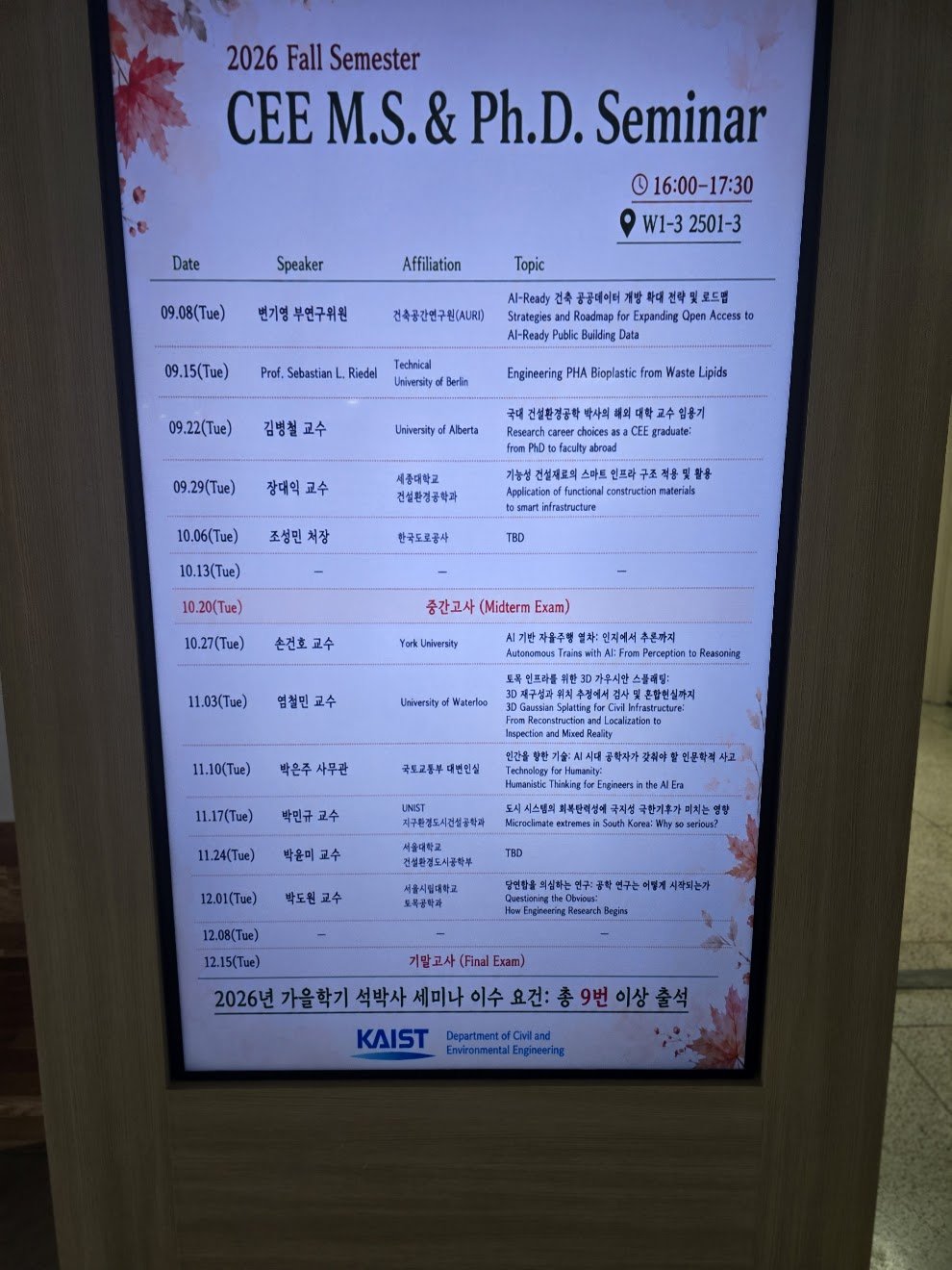
On 27 October, Prof. Sohn spoke at the Fall 2026 M.S. and Ph.D. Seminar of KAIST’s Department of Civil and Environmental Engineering. His talk, “Autonomous Trains with AI: From Perception to Reasoning,” started from a simple gap. Today’s driverless metros are very safe, but when something unexpected happens — a communication failure or a positioning outage — the train brakes and waits for an operator to arrive and drive it by hand. An automatic train follows commands from outside. An autonomous train senses its surroundings and makes its own decisions.
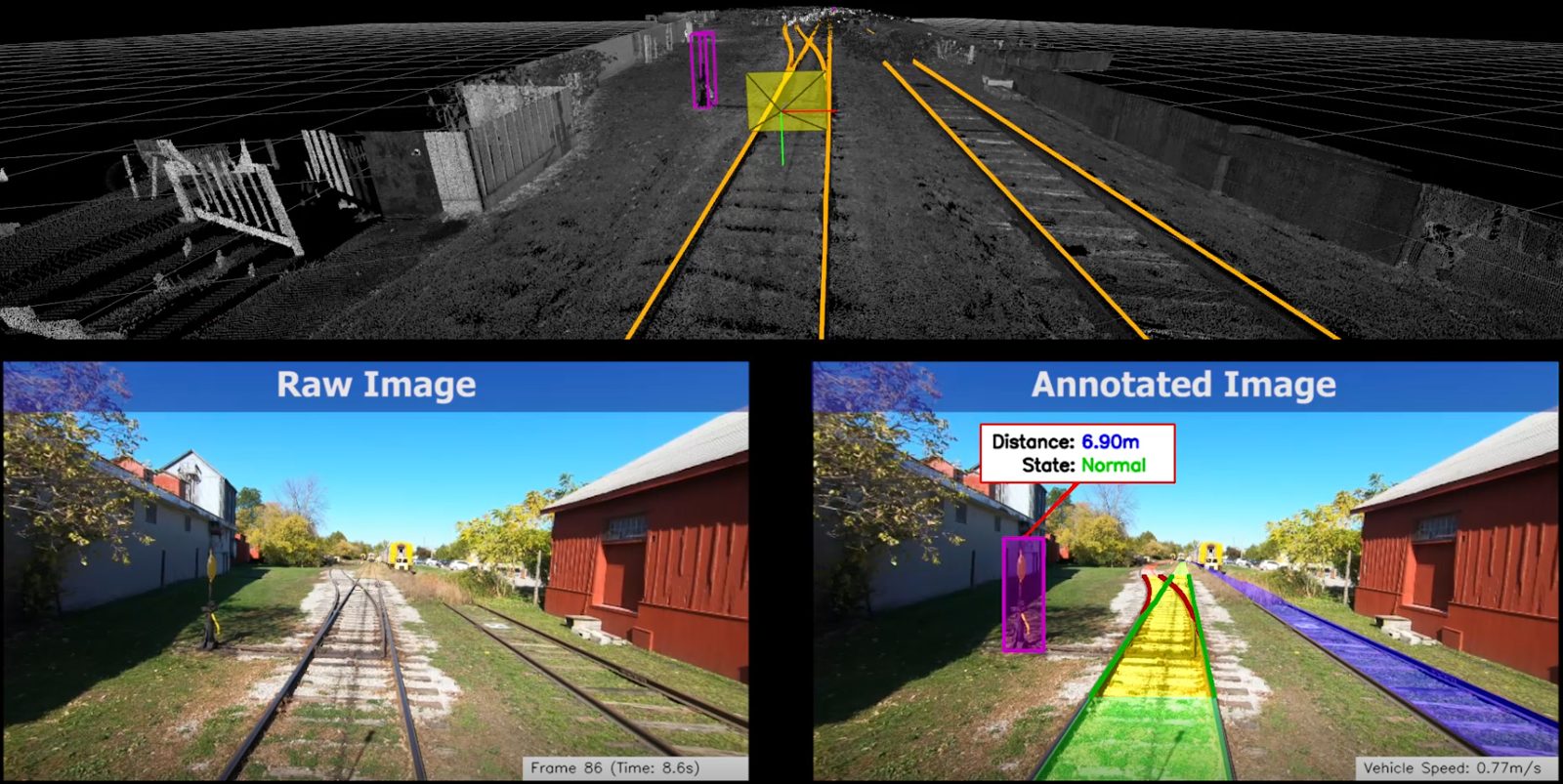
He presented the Ontario Train Autonomy Collaboration (OnTRAC) project, carried out with Thales Canada, Neptec and TrackGen, which set out to let a degraded train recover safely without human help. The team built an AI perception system that fuses LiDAR, camera and radar data to find the tracks and the train’s own path, even through switches, and to detect and track obstacles on the line. Because dangerous scenes are hard to capture on a real railway, they also built a digital twin of a heritage railway to create synthetic training data. The system was demonstrated in a live autonomous recovery of a rail vehicle.
Looking ahead, Prof. Sohn showed how vision-language models can let a train not only find its path, but also explain in plain language why that path is valid — for example by reasoning about rail continuity and switch positions. This kind of explanation supports safety assurance and human trust.
Korean Society for Railway: Infrastructure Digital Twins
On 29 October, Prof. Sohn spoke in the T-RAX special session of the Korean Society for Railway (KSR) 2026 Autumn Conference, held at Phoenix Island in Jeju. His talk, “Infrastructure Digital Twins: From Mapping to Multimodal AI,” explained how a digital twin — a virtual copy of real infrastructure — helps engineers understand the condition of long, safety-critical assets such as railways and predict how they will change.
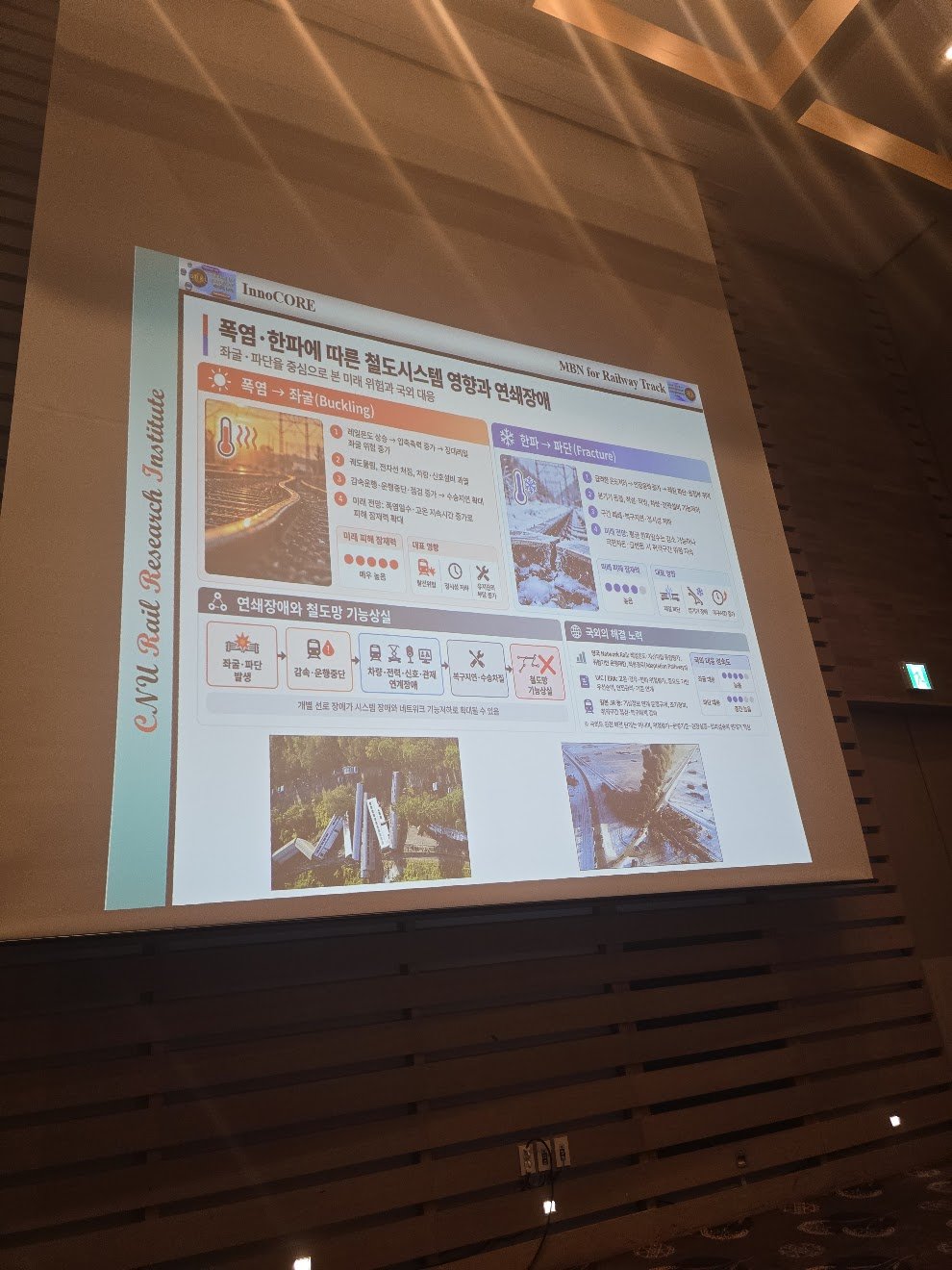
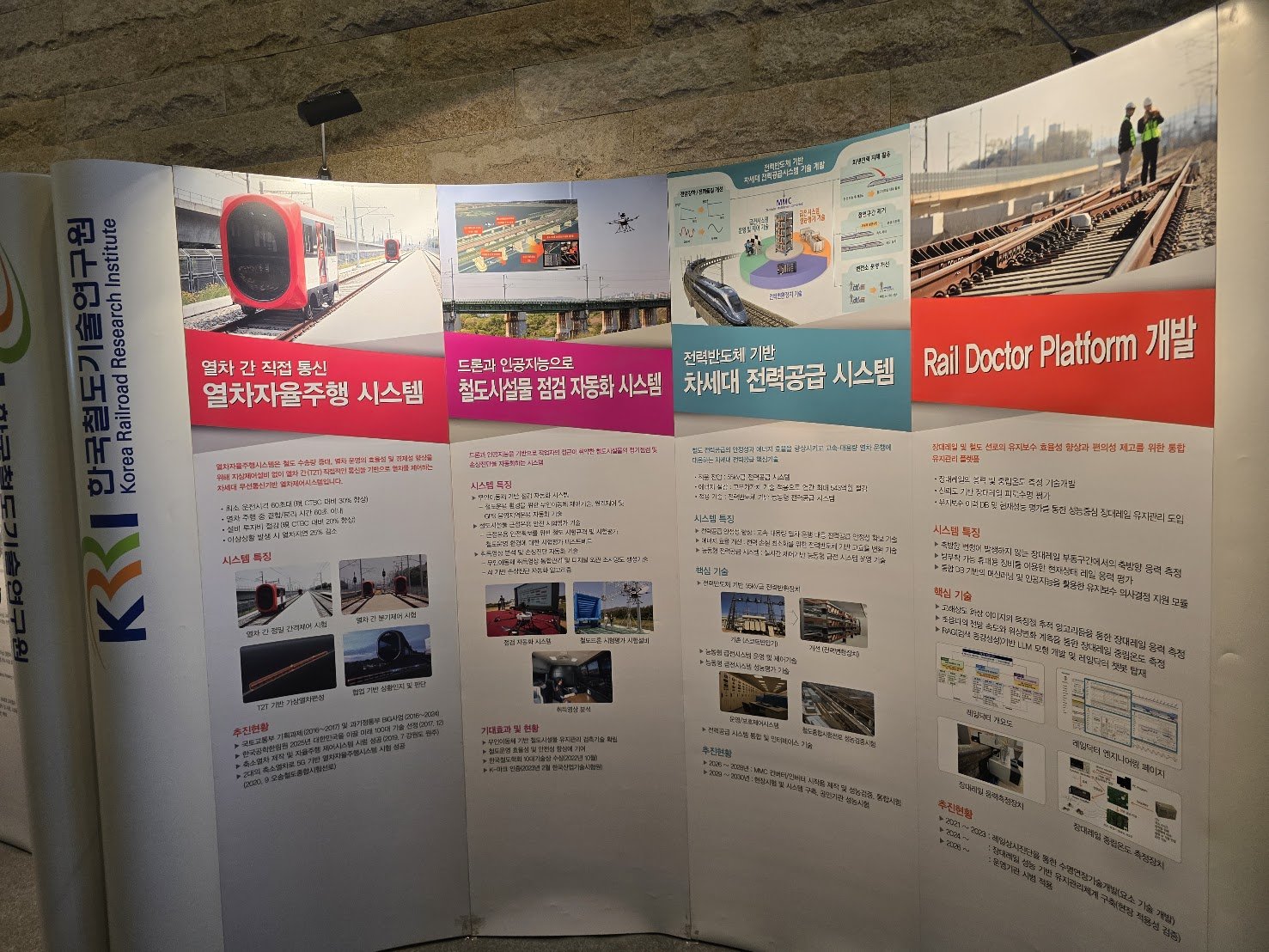
He walked through the ways infrastructure is captured in 3D today, from satellites and aircraft to drones, mobile mapping and autonomous mapping, and showed how geospatial AI turns huge 3D datasets into meaningful models of tracks, structures and equipment. He then argued that the role of the digital twin is changing. For an autonomous train, the twin becomes the map it uses to know where it is and which path lies ahead, and a safe virtual world in which its perception can be trained and tested.
The last part of the talk asked what it takes for a twin to reason. A detector can say where the rails, sleepers and switches are; a world model should also say which track is live, and why — for example, because a switch blade is closed against its rail. Prof. Sohn showed how railway-adapted vision-language models are starting to give such reasons, and why a reason can only be trusted as evidence when it truly matches the decision. He closed with the open steps ahead: twins that others can read through open standards such as IFC-Rail and railML, twins that carry physics as well as geometry, and twins that can explain the causes of defects, not only report them.
Building ties with Korean railway research
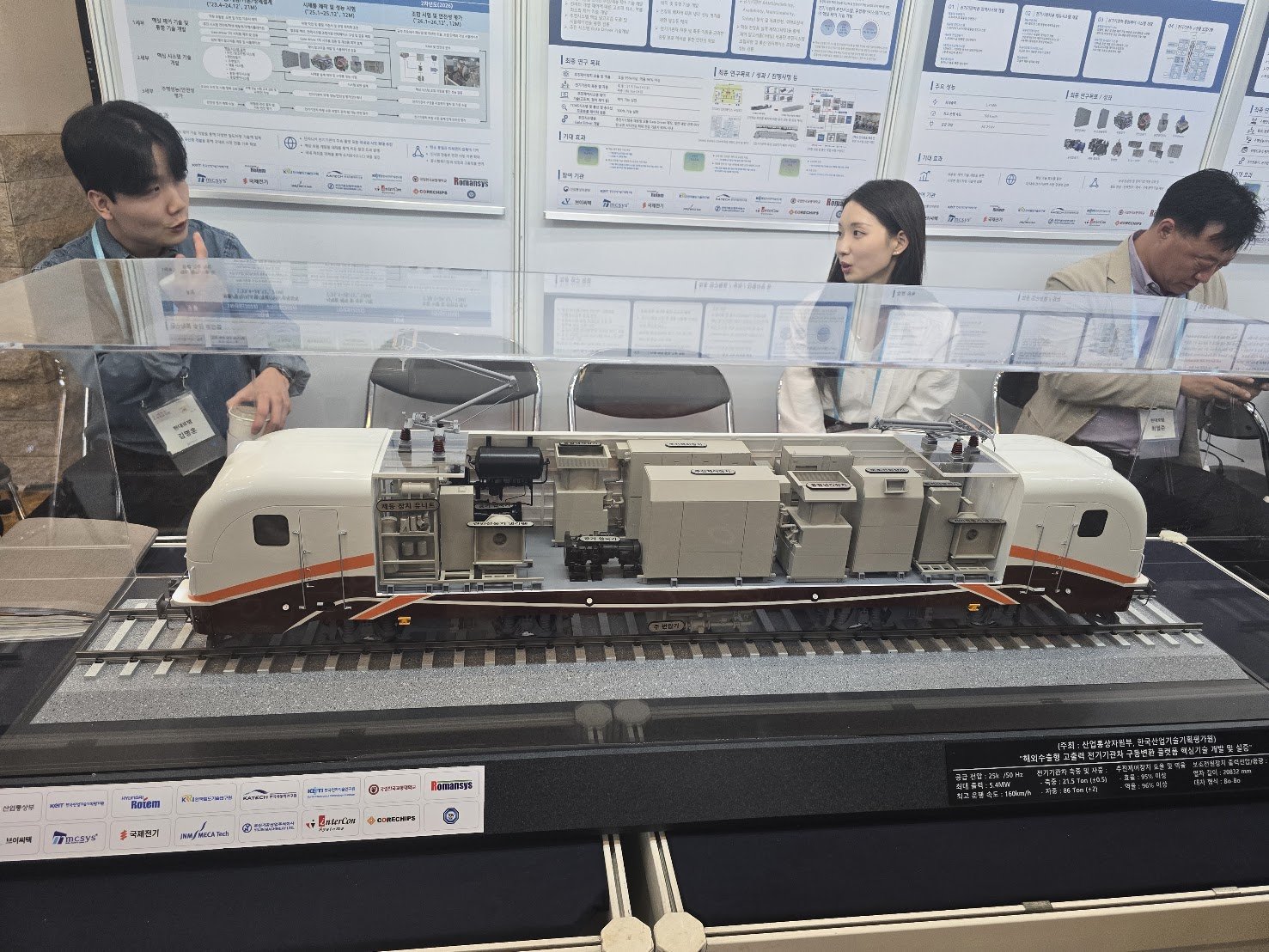
The visit continues the AUSM Lab’s long collaboration with railway research in Korea, and builds on the lab’s work on railway digital twins and autonomous trains with industry partners in Canada. We thank Prof. Hoon Sohn and the T-RAX team for their invitation and warm hospitality.